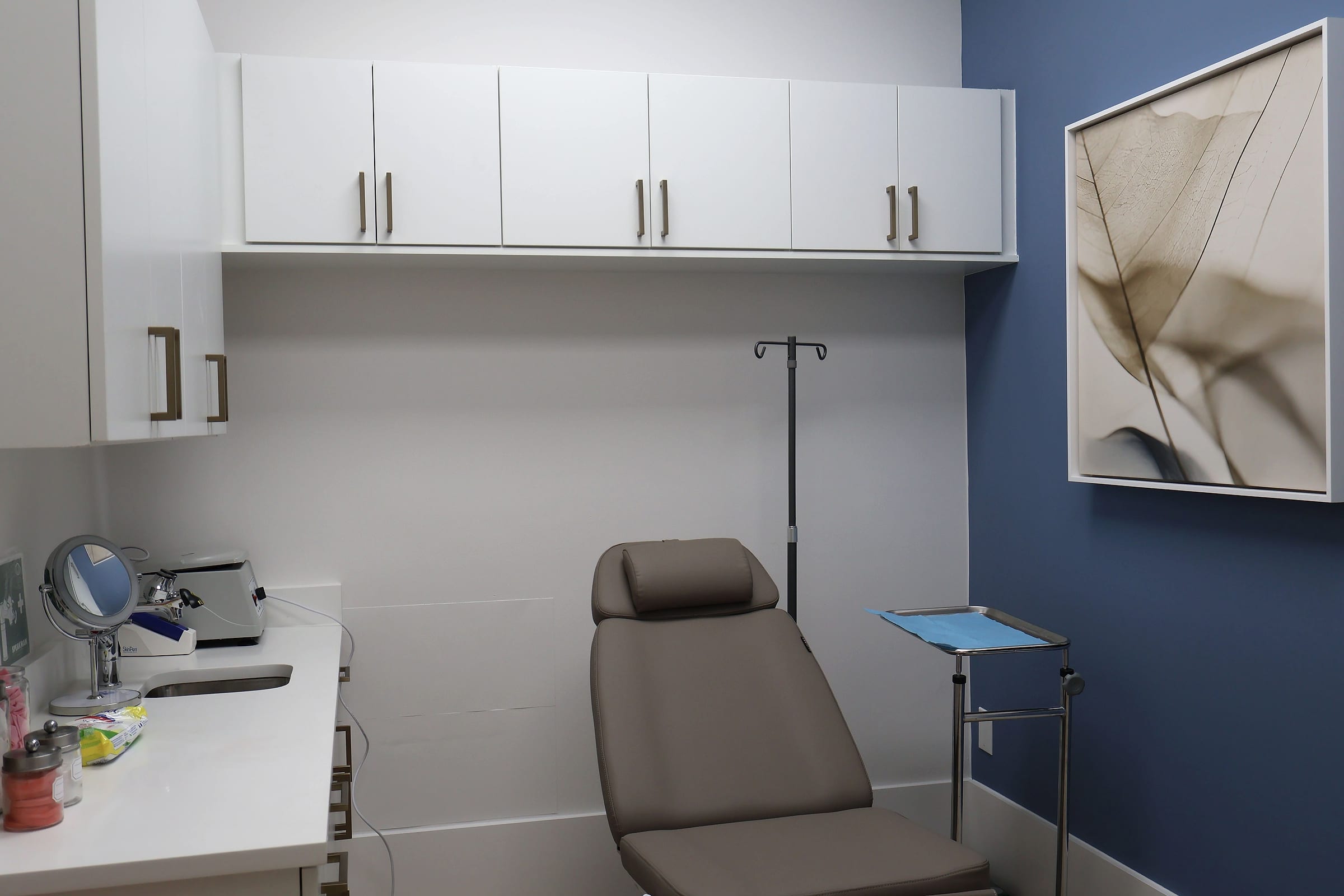
A hormone panel measures the hormones and related markers your clinician needs before any hormone plan. There is a panel for women and a panel for men, drawn here in the morning and reviewed with you.
If you start a plan, repeated at intervals your clinician sets
01
Where you are
Changes in sleep, energy, libido, mood or recovery from training can have a hormonal cause. They can also have many others, which is why we measure before anything else. Or you may feel well and simply want a reference point for later. That is a good reason too.
02
What we measure
For women: estradiol, total testosterone, LH, FSH, SHBG, a thyroid screen (TSH), a complete blood count and a comprehensive metabolic panel. Together they show where your hormones sit, how your body is regulating them, and the general health markers your clinician checks before any hormone plan.
For men: total testosterone, PSA and a complete blood count. These are the markers your clinician checks before any hormone plan and uses to monitor one afterward.
Results are read together, not one at a time. Your clinician looks at where you sit within each range, how the markers relate to each other, and whether they match what you have noticed. If your levels look appropriate, we tell you, and that is useful to know. If they point toward a plan, this panel becomes your baseline.
03
What to expect
Book a morning draw. Hormone levels are most consistent earlier in the day, so we schedule hormone draws in the morning. If you still have a cycle, your clinician may ask you to book on a particular day of it. Because the women's panel includes a metabolic panel, you may be asked to fast; we will confirm when you book.
Results usually come back within a week. Then you go through them with your clinician. You are welcome to a copy as soon as they are in.
Naiva is cash-pay and does not bill insurance. The panel is billed through our account with the laboratory, and the price is confirmed with you before the draw.
04
Who you'll see
Your blood is drawn here by Danielle or Rosie, our nurse practitioners, who also go through your results with you, under Medical Director oversight
Women make testosterone too, in smaller amounts than men. Measuring it alongside estradiol, LH, FSH and SHBG gives your clinician a fuller picture of your hormones.
When should the blood be drawn?
In the morning, when levels are most consistent. If you still have a cycle, your clinician may ask for a particular day of it.
Do I need to fast?
It depends on the panel, and we will tell you when you book. When fasting is needed, it means nothing but water for about eight hours beforehand.
Do I need this before hormone therapy?
Yes. No hormone plan at Naiva starts without it. If you have recent results from another provider, bring them. If they are complete and were drawn at the right time, we use them and draw only what is missing.
Can I see my results before my review?
Yes. Your results are yours. Ask and we will send you a copy as soon as they are in. Many patients prefer to wait and go through them with their clinician, and that is your choice too.
What if my results are normal?
Then you have learned something useful: your hormones are probably not the explanation, and a hormone plan would not be the answer. Your clinician will talk through what else might be worth looking at.